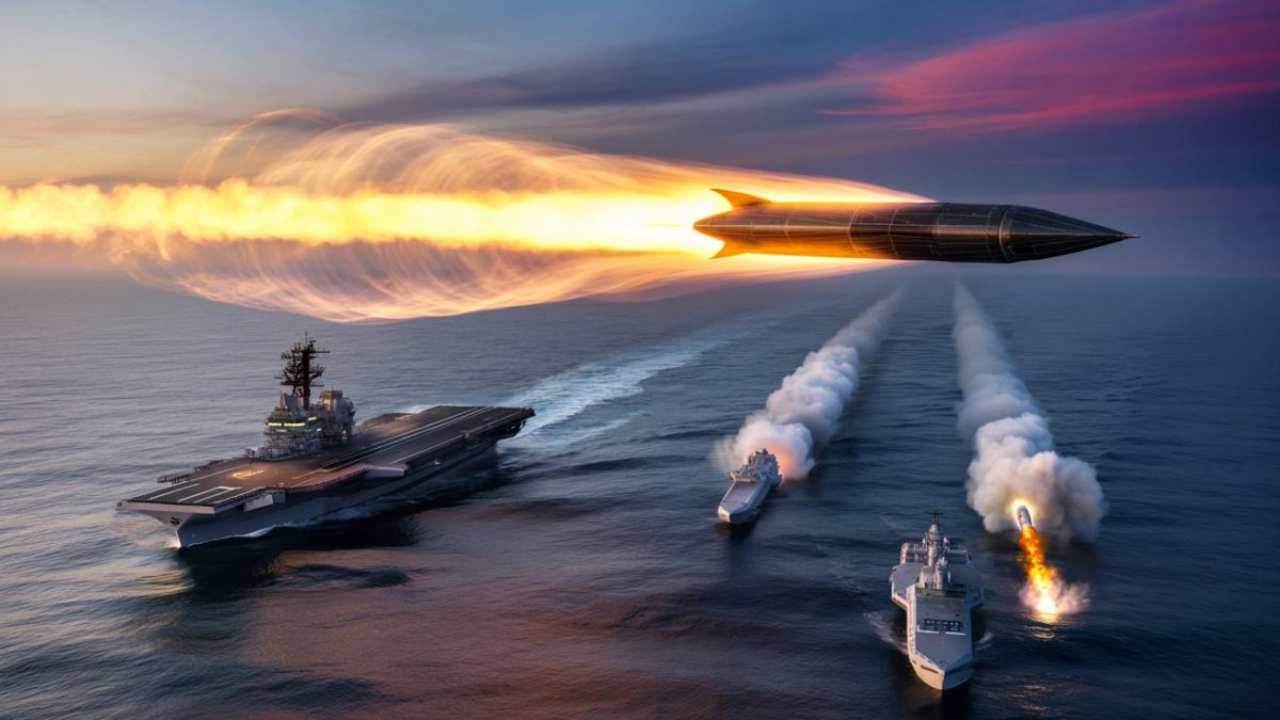
Chinese Missile Capabilities Targeting U.S. Navy Could Trigger Rapid Shift in Modern Warfare
Rising geopolitical tensions in the Indo-Pacific region have intensified concerns over advanced missile systems reportedly developed to target major naval forces. Defense analysts warn that these technologies could dramatically alter the course of any potential conflict, with the balance of power shifting in a matter of hours rather than months.
Growing Focus on Advanced Missile Systems
Military experts have increasingly pointed to the rapid development of long-range and high-speed missile systems designed to strike moving targets at sea. These weapons are believed to be capable of targeting large naval assets, including aircraft carriers, which have long been central to maritime dominance.
Such systems combine speed, precision, and extended range, making them difficult to counter once deployed. Their ability to reach distant targets has added a new layer of complexity to global defense planning.
Why Experts Warn of a Sudden Shift
The concern lies in how quickly these weapons could impact a real-world conflict. A successful strike against critical naval assets could significantly weaken operational capabilities, forcing immediate changes in military strategy.
Unlike traditional warfare, where shifts in power often occur gradually, modern technologies have introduced the possibility of sudden and decisive moments. A single coordinated attack could reshape the battlefield almost instantly.
Understanding the Technology
Recent advancements in missile systems include:
-
High-speed weapons capable of traveling at extreme velocities
-
Precision targeting systems designed to track moving objects
-
Extended-range capabilities allowing strikes from far distances
Together, these features create what defense strategists often describe as a “denial zone,” where opposing forces face increased risk when operating within certain regions.
Read Also:- 2 Men Arrested After Missing Man Found Buried in Shallow Grave in Woods
Strategic Impact on Naval Operations
Naval forces have historically relied on large, mobile platforms to project power across oceans. However, the emergence of highly advanced missile systems is prompting a re-evaluation of these strategies.
Experts suggest that future approaches may involve:
-
Distributing assets across wider areas
-
Increasing the use of smaller, more agile systems
-
Strengthening defensive technologies
These adjustments aim to reduce vulnerability while maintaining operational effectiveness.
Broader Global Implications
The development of such military capabilities is contributing to heightened tensions in strategically important regions. Areas with existing territorial disputes and heavy military presence are particularly sensitive to changes in defense technology.
As nations continue to invest in advanced systems, the risk of rapid escalation becomes a growing concern for global stability.
A New Era of Warfare
Modern conflict is increasingly defined by speed, technology, and precision. The idea that a war’s direction could change “overnight” reflects how quickly advanced systems can influence outcomes.
This shift underscores the importance of preparedness, innovation, and diplomatic efforts to manage rising tensions.
The evolution of missile technology is reshaping the future of warfare in significant ways. While these developments highlight advancements in defense capabilities, they also raise serious questions about stability and security in an increasingly interconnected world.
Balancing technological progress with strategic restraint will be essential in preventing conflicts and maintaining global peace.
FAQs
1. What does “overnight war shift” mean?
It refers to a rapid change in the balance of power during a conflict due to advanced technology.
2. Why are these missile systems significant?
They can strike key targets quickly and are difficult to defend against.
3. What makes modern missiles different?
They are faster, more precise, and capable of traveling longer distances.
4. How could this affect naval forces?
It may force changes in strategy and reduce reliance on large, centralized assets.
5. Are these developments recent?
Yes, advancements in missile technology have accelerated in recent years.
6. What regions are most impacted?
Strategically important maritime regions are most affected.
7. Can these weapons be intercepted?
Defense systems exist, but interception can be challenging.
8. Does this mean conflict is likely?
Not necessarily, but it highlights rising tensions and risks.
9. How are countries responding?
By investing in new technologies and adapting military strategies.
10. What is the main takeaway?
Technology is rapidly changing how conflicts could unfold in the future.

Pulkeet Gupta is a dedicated content writer specializing in the field of education and entertainment niche. With a passion for learning and a keen interest in sharing knowledge, Pulkeet has established himself as a prominent figure in the education and entertainment writing community.